Scott Prestidge← All work
Full thesis presentation panel for Ctrl + Alt + Escape

Master’s thesis · RMIT University · 2024

Ctrl + Alt + Escape

Who is the author when AI becomes part of the design process?

Type
M.Arch thesis
Supervisor
Roland Snooks
Exhibited
RMIT 2024
& catalogue
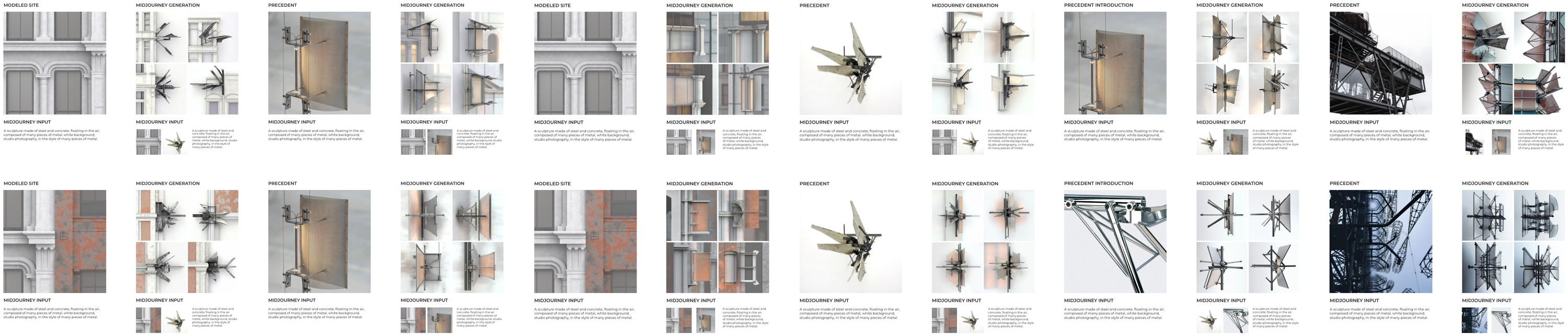
Design process: two rows of modelled site, precedent and Midjourney input and generation images, each with its prompt text

Overview

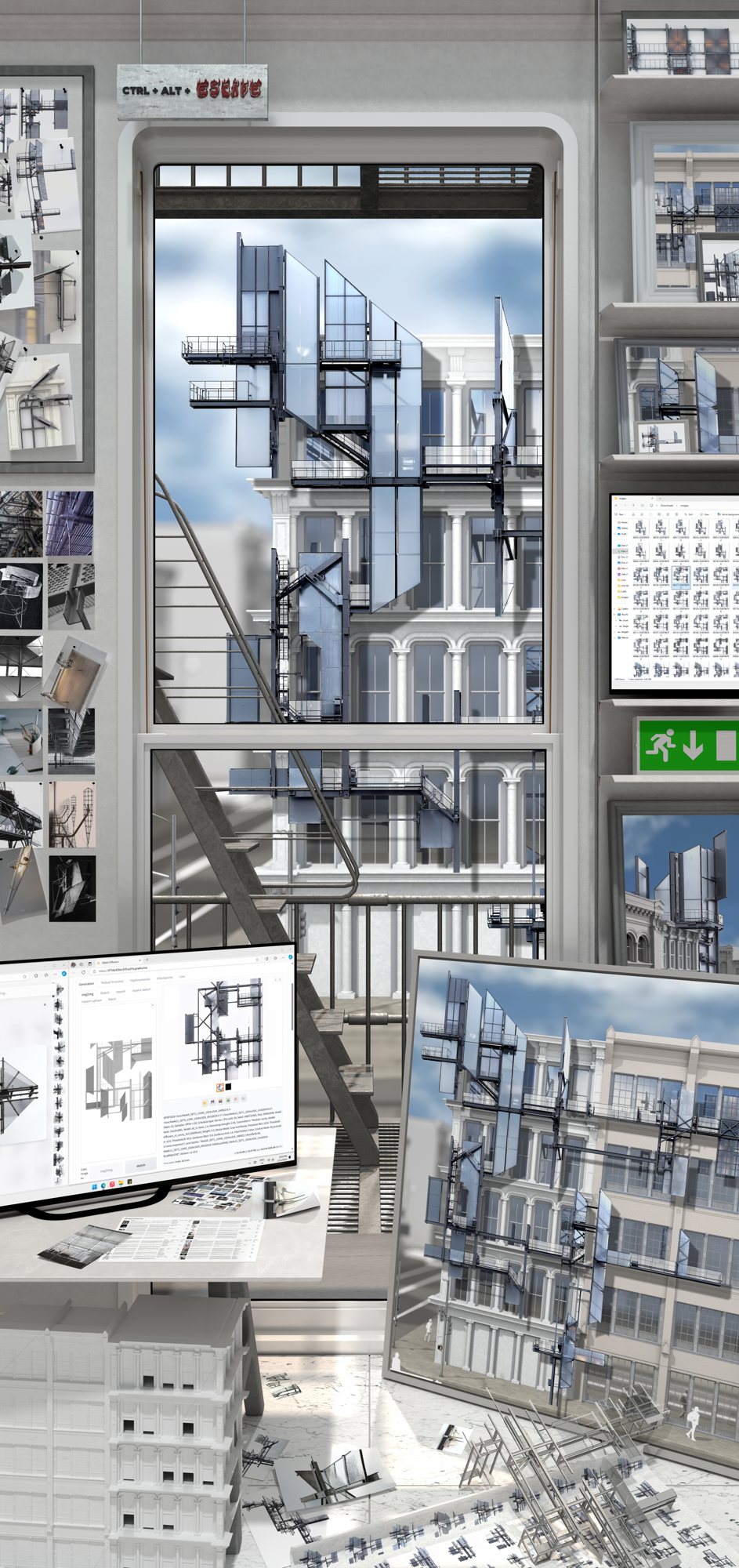
My Master of Architecture thesis explored authorship in AI-assisted design through the fire escapes of SoHo’s Cast Iron District in New York. It asked how these familiar structures could become expressive architectural additions, and how the decisions behind AI-generated design could remain visible.

Design approach

I used architectural precedents to inform a process of generation, selection and refinement. AI supported the exploration of form, while my decisions guided which ideas were developed and how they related to the existing buildings.

Making the process visible

The project focused on transparency and traceability: showing how references, prompts and design decisions influenced the work. This made the relationship between human intention and machine-generated output part of the project itself.

Proposal

The resulting studies reimagined fire escapes as additive architectural interventions, exploring their visual and spatial potential beyond their familiar functional role.

Next · Buller Open-Air → ← All work

Renders: Scott Prestidge

Full thesis presentation panel for Ctrl + Alt + Escape
Scott Prestidge ← All work

Master’s thesis · RMIT University · 2024

Ctrl + Alt + Escape

Who is the author when AI becomes part of the design process?

Context
Master of
Architecture Thesis
University
RMIT University
2024
Supervisor
Roland Snooks
Exhibited
Major Project Catalogue
2024 RMIT Exhibition
Design process: two rows of modelled site, precedent and Midjourney input and generation images, each with its prompt text

Overview

My Master of Architecture thesis explored authorship in AI-assisted design through the fire escapes of SoHo’s Cast Iron District in New York. It asked how these familiar structures could become expressive architectural additions, and how the decisions behind AI-generated design could remain visible.

Design approach

I used architectural precedents to inform a process of generation, selection and refinement. AI supported the exploration of form, while my decisions guided which ideas were developed and how they related to the existing buildings.

Making the process visible

The project focused on transparency and traceability: showing how references, prompts and design decisions influenced the work. This made the relationship between human intention and machine-generated output part of the project itself.

Proposal

The resulting studies reimagined fire escapes as additive architectural interventions, exploring their visual and spatial potential beyond their familiar functional role.

RENDERS: SCOTT PRESTIDGE← All workNext · Buller Open-Air →